
When a Small Cut Becomes Dangerous: Warning Signs You Need a Wound Care Specialist – Texas Comprehensive Care
Introduction
A small cut looks harmless. Most people clean it, cover it, and move on. Usually, the body heals the wound within a few days. However, sometimes that simple cut turns into a serious problem.
Many patients search online with questions like:
- Why is my cut not healing?
- How do I know if a wound is infected?
- When should I see a doctor for a cut?
These questions matter. A wound that refuses to heal often signals an underlying health issue. Therefore, early treatment from a wound care specialist near me can prevent severe complications.
Patients in Texas often choose Texas Comprehensive Care in Sugar Land, TX because the clinic provides advanced diagnostics and personalized treatment plans. Their specialists focus on identifying the root cause of slow healing wounds and delivering effective care.
Understanding the warning signs can protect your health. It can also prevent infections, tissue damage, and chronic wounds.
Why Some Wounds Don’t Heal
Many people ask, why do some wounds take longer to heal?
The answer often lies in the body’s ability to repair tissue. Normally, the body moves through several healing stages. First, blood clotting occurs. Next, the immune system fights bacteria. Then, new tissue forms.
However, certain conditions interrupt this process.
Common causes include:
- Poor blood circulation
- Diabetes
- Infection
- Pressure on the wound
- Vascular disease
- Weak immune system
These conditions create what doctors call chronic wounds.
If you search for chronic wound treatment near me, specialists often evaluate circulation, nerve damage, and underlying medical issues. Without treatment, the wound may worsen.
This situation explains why many patients seek help from a wound care center near me before complications develop.
What Is a Chronic Wound?
Many people wonder, what is a chronic wound?
Doctors classify a wound as chronic when it fails to heal within several weeks.
Common examples include:
- Diabetic foot ulcers
- Pressure ulcers
- Leg ulcers
- Surgical wounds that reopen
Patients often search for non healing wound treatment when wounds persist for weeks or months.
At Texas Comprehensive Care, specialists provide advanced treatment through their wound care clinic Sugar Land TX. Their team evaluates the wound and determines the most effective treatment strategy.
Early treatment always improves outcomes.
Warning Signs of an Infected Wound
Some symptoms clearly signal danger.
Patients frequently search for warning signs of infected wound because infections can escalate quickly.
Common symptoms include:
- Redness around the wound
- Swelling or warmth
- Pus or drainage
- Strong odor
- Increasing pain
- Fever
- Darkening skin
These symptoms often appear when bacteria invade the tissue.
Patients also ask online, what does an infected wound look like?
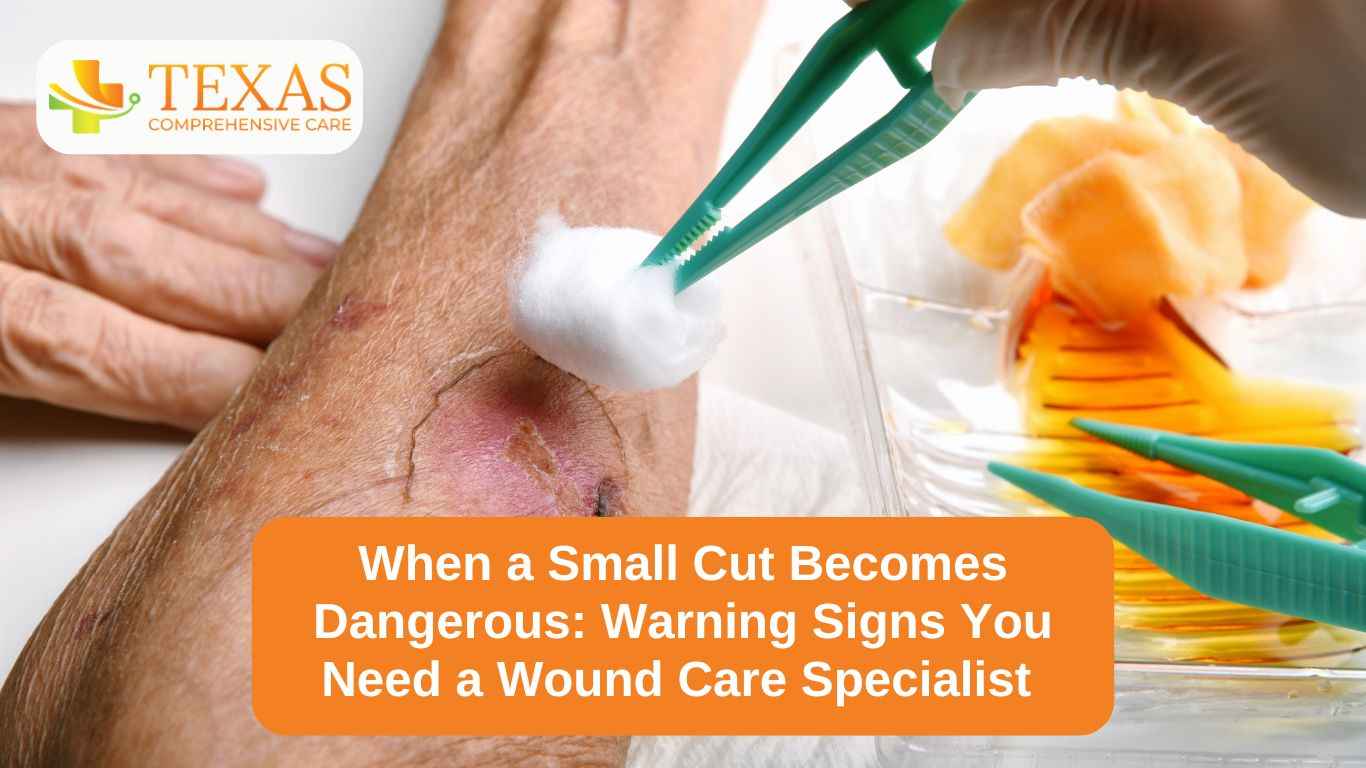
An infected wound often appears red, swollen, and irritated. Fluid may leak from the area. The wound may also smell unpleasant.
If you notice these symptoms, you should immediately contact a wound infection doctor near me or visit a wound care clinic near me open now.
Prompt treatment prevents complications.
When a Small Cut Becomes Dangerous
Most cuts heal quickly. However, some wounds worsen unexpectedly.
Patients often ask, can a small cut become dangerous?
Yes. Even a minor injury can lead to infection if bacteria enter the wound. Poor circulation can also prevent healing.
For example:
A diabetic patient may develop a small foot blister. The blister becomes infected. Soon, the infection spreads to surrounding tissue.
Without treatment, the wound may evolve into a diabetic foot ulcer.
This situation explains why many patients search for diabetic wound care specialist or foot wound treatment specialist when wounds persist.
Why Diabetic Wounds Heal Slowly
Patients with diabetes face higher risks.
Many people search online: why do diabetic wounds heal slowly?
High blood sugar damages blood vessels and nerves. This damage reduces blood flow to the wound. Reduced circulation slows healing.
Additionally, nerve damage prevents patients from noticing injuries early.
This combination increases the risk of infection.
Therefore, patients often need specialized diabetic foot wound treatment from a diabetic wound care clinic Sugar Land TX.
At Texas Comprehensive Care, specialists provide comprehensive diabetic wound care near me services that help patients recover safely.
The Role of Circulation in Wound Healing
Blood circulation plays a critical role in healing.
Patients often ask, can poor circulation slow wound healing?
Yes. Healthy blood flow carries oxygen and nutrients to damaged tissue. Without circulation, wounds struggle to repair themselves.
Patients with vascular disease often need vascular wound care specialist treatment.
Clinics that offer vascular wound treatment near me evaluate circulation using diagnostic imaging and specialized tests.
Proper circulation treatment improves healing outcomes significantly.
How a Wound Care Specialist Treats Chronic Wounds
Many patients search for when to see a wound care doctor or wound care doctor near me.
Specialists provide advanced treatment options that go beyond basic wound cleaning.
Treatment may include:
- Advanced wound cleaning
- Infection control
- Specialized dressings
- Pressure relief therapy
- Circulation therapy
- Tissue regeneration treatment
These treatments form the foundation of advanced wound care therapy.
Patients searching for advanced wound healing treatments often visit a wound healing center near me for expert care.
At Texas Comprehensive Care, physicians use modern technology and personalized treatment plans to deliver effective results.
Best Treatment Options for Chronic Wounds
Many patients ask: what is the best treatment for chronic wounds?
Doctors evaluate several factors before choosing a treatment plan.
Treatment options include:
- Advanced wound dressings
- Debridement (removing damaged tissue)
- Antibiotic therapy
- Circulation improvement treatments
- Pressure offloading devices
Patients often search for advanced wound therapy near me or wound healing treatment center when wounds fail to heal.
Specialists at Texas Comprehensive Care offer comprehensive wound care management near me services to treat even complex wounds.
Diabetic Foot Ulcers and Serious Complications
Diabetic foot ulcers represent one of the most serious wound complications.
Patients often search for:
- diabetic foot ulcer specialist
- foot ulcer treatment near me
- diabetic foot wound clinic
Without treatment, these ulcers can lead to severe infections.
Doctors may treat these wounds through specialized chronic wound infection treatment and circulation therapy.
At Texas Comprehensive Care, the team provides expert diabetic foot wound care Sugar Land TX to prevent serious complications.
How to Heal Wounds Faster
Many people search for how to heal wounds faster.
Simple steps can support healing:
- Clean the wound immediately
- Apply sterile dressings
- Avoid pressure on the wound
- Control blood sugar
- Seek medical care early
However, persistent wounds require professional treatment.
Patients searching for wound healing specialist near me often benefit from advanced care.
When Should You See a Wound Care Specialist?
Many patients wonder, when should I see a wound care specialist?
You should seek medical care if:
- The wound lasts longer than two weeks
- Pain increases
- The wound leaks fluid
- Skin becomes dark or swollen
- Fever develops
These symptoms indicate possible infection.
Searching for urgent wound care treatment or wound care treatment center near me can help you find expert care quickly.
Why Texas Comprehensive Care Is a Leading Wound Care Clinic in Sugar Land, TX
Patients searching for best wound care clinic near me often choose Texas Comprehensive Care because the clinic offers:
✔ Experienced wound care doctors
✔ Advanced wound care therapy
✔ Comprehensive treatment plans
✔ Personalized patient care
The clinic serves patients looking for:
- wound care specialist Sugar Land Texas
- chronic wound care Sugar Land TX
- wound care services Sugar Land TX
- wound care doctors Sugar Land TX
Their team focuses on identifying the root cause of chronic wounds and delivering effective treatment.
Patients trust Texas Comprehensive Care because they provide expert care and advanced technology in one location.
Frequently Asked Questions About Wound Care and Non-Healing Wounds
- Why is my cut not healing?
A cut may not heal because of infection, poor blood circulation, diabetes, repeated pressure, or underlying vascular disease. When a wound does not improve within two weeks, doctors classify it as a chronic wound. In such cases, visiting a wound care specialist near you can help identify the root cause and start advanced treatment.
- How long does it take for a wound to heal?
Most minor wounds heal within 7 to 14 days. However, if a wound stays open or worsens after two weeks, it may require professional care from a wound care doctor in Sugar Land, TX or a specialized wound care clinic.
- What causes a wound not to heal?
Several factors slow wound healing, including infection, diabetes, poor circulation, pressure on the wound, and weakened immunity. A chronic wound specialist near me can evaluate these conditions and provide targeted treatment.
- How do I know if a wound is infected?
Common signs of infection include redness, swelling, warmth around the wound, pus or drainage, strong odor, and increasing pain. If you notice these symptoms, seek infected wound treatment near me immediately to prevent complications.
- What are the warning signs of an infected wound?
Warning signs include persistent redness, swelling, foul odor, leaking fluid, darkened skin, and fever. These symptoms indicate infection and require evaluation by a wound infection doctor near me or an advanced wound care clinic.
- Can a small cut become dangerous?
Yes. Even a small cut can become dangerous if bacteria enter the wound or if the body cannot heal properly. Patients with diabetes or poor circulation face higher risks and should seek advanced wound care services if a wound worsens.
- When should I see a wound care specialist?
You should see a specialist if a wound does not heal within 10–14 days, becomes infected, or repeatedly reopens. Searching for a wound care specialist near me can connect you with expert treatment quickly.
- What is a chronic wound?
A chronic wound is a wound that fails to heal within several weeks. Common examples include diabetic foot ulcers, pressure sores, and leg ulcers. These wounds require advanced treatment from a wound healing specialist.
- Why do diabetic wounds heal slowly?
High blood sugar damages nerves and blood vessels, which reduces blood circulation. Reduced circulation slows healing and increases infection risk. Therefore, patients often need specialized diabetic wound care treatment.
- What does an infected wound look like?
An infected wound usually appears red, swollen, and irritated. It may produce pus, fluid, or a strong odor. Pain may also increase. A wound care doctor near you can diagnose and treat the infection early.
- What should I do if my wound won’t heal?
If a wound does not heal after two weeks, you should consult a wound care clinic near you. Specialists can evaluate the wound, identify underlying conditions, and start advanced wound healing treatments.
- Can poor circulation slow wound healing?
Yes. Poor blood circulation prevents oxygen and nutrients from reaching the wound. This delay can turn a minor injury into a chronic wound. Specialists often recommend vascular wound treatment to improve circulation.
- Why does my wound keep reopening?
Repeated reopening often indicates underlying pressure, infection, or circulation problems. A chronic wound treatment clinic can diagnose the cause and provide effective treatment.
- What are the risks of untreated wounds?
Untreated wounds can lead to infections, tissue damage, chronic ulcers, and severe complications. In extreme cases, untreated diabetic wounds can result in amputation. Early care from a wound care center near you reduces these risks.
- How do doctors treat infected wounds?
Doctors treat infected wounds through cleaning, removing damaged tissue, controlling infection, and applying advanced dressings. Some clinics also provide advanced wound healing therapies to accelerate recovery.
- What is advanced wound care treatment?
Advanced wound care treatment uses specialized medical techniques such as debridement, advanced dressings, infection control, and circulation therapy to promote faster healing.
- How do specialists treat diabetic foot wounds?
Doctors treat diabetic foot wounds through infection control, pressure relief, circulation improvement, and specialized wound dressings. Many patients seek treatment at diabetic wound care clinics for expert care.
- How do I know if my wound needs medical attention?
You should seek medical care if your wound lasts longer than two weeks, becomes painful, leaks fluid, or develops redness and swelling. A wound care doctor near you can determine the best treatment.
- Can infected wounds heal on their own?
Minor infections may improve with proper cleaning. However, many infected wounds require professional treatment to prevent complications. Visiting a wound healing clinic near you ensures safe recovery.
- How do I clean an infected wound?
First, wash the wound with clean water and mild soap. Then apply an antiseptic and sterile dressing. If infection signs persist, consult a wound care specialist for professional treatment.
- Why is my wound leaking fluid?
Fluid drainage often indicates infection or inflammation. A wound care treatment center near you can evaluate the wound and provide infection control treatment.
- Why is my wound turning dark?
Dark skin around a wound may signal tissue damage or reduced blood flow. Immediate evaluation by a vascular wound care specialist is important.
- Why does my wound smell bad?
A strong odor usually indicates bacterial infection or tissue breakdown. Seeking infected wound treatment near me can prevent the infection from spreading.
- How long can a wound stay open?
A wound should begin healing within days. If it remains open for several weeks, doctors classify it as a chronic wound that requires specialized care.
- What is the best treatment for chronic wounds?
The best treatment involves identifying the underlying cause, controlling infection, improving circulation, and using advanced wound dressings.
- What are pressure ulcers?
Pressure ulcers develop when constant pressure reduces blood flow to the skin. These wounds often occur in immobile patients and require pressure ulcer treatment from wound specialists.
- What is diabetic foot ulcer treatment?
Treatment focuses on controlling infection, improving circulation, and reducing pressure on the wound. A diabetic foot ulcer specialist can provide targeted treatment.
- Where can I find a wound care specialist in Sugar Land, TX?
Patients searching for wound care specialist Sugar Land TX often visit Texas Comprehensive Care, a trusted clinic providing advanced wound treatment and personalized care plans.
- Why do patients choose Texas Comprehensive Care for wound treatment?
Patients choose Texas Comprehensive Care in Sugar Land, TX because the clinic offers advanced wound care technology, experienced physicians, and comprehensive treatment for chronic wounds, diabetic wounds, and infections.
- What makes Texas Comprehensive Care one of the best wound care clinics near me?
Texas Comprehensive Care provides personalized treatment plans, advanced wound healing therapies, and expert physicians who focus on faster recovery and long-term healing for patients with chronic wounds.
Don’t Ignore a Wound That Won’t Heal
A small cut should heal quickly.
However, when a wound refuses to heal, your body signals a deeper problem.
Ignoring that signal can lead to infection, tissue damage, and serious complications.
Instead, seek expert care from a wound care specialist near you.
If you live in Texas and search for best wound care center Sugar Land TX, the experienced team at Texas Comprehensive Care provides the advanced treatment you need.
Early care protects your health and supports faster recovery.